
A sharp pain during a sprint, a swollen ankle after a five-a-side tackle, or a shoulder that will not settle after the gym can quickly disrupt more than training. Sports injuries affect recreational exercisers, committed club players and high-performance athletes alike. The right response in the first few days can influence not only pain levels, but also how confidently and safely you return to activity.
The aim is rarely just to get back to sport as quickly as possible. It is to return with sufficient movement, strength, control and confidence to cope with the demands of your chosen activity. That requires a clear diagnosis, a tailored rehabilitation plan and realistic progression rather than simply waiting for symptoms to disappear.
Why sports injuries need an individual assessment
Two people can describe the same injury and require very different treatment. A runner with Achilles pain may be dealing with a sudden overload after increasing mileage, while another may have gradually developed tendon pain because of reduced calf strength, training surfaces or unsuitable recovery between sessions. Treating both cases with exactly the same exercises would overlook the factors that caused the problem.
A chartered physiotherapist assesses more than the painful area. This may include your range of movement, joint stability, strength, balance, movement technique, training history and the specific demands of your sport. For example, returning to gentle jogging is not the same as being ready to change direction at speed on a football pitch, land from a jump in netball or serve repeatedly in tennis.
An accurate assessment also helps distinguish between problems that can be managed through rehabilitation and those that may need imaging, medical review or urgent referral. Pain alone does not always indicate the severity of an injury, and a lack of pain during everyday walking does not necessarily mean a joint or muscle is ready for competition.
Common sports injuries and what they can mean
Muscle strains, ligament sprains, tendon problems, knee pain, shoulder injuries and lower-back pain are among the most frequent reasons people seek sports physiotherapy. They may occur suddenly after a fall, twist or powerful movement, but many develop gradually when training load exceeds the body’s current capacity.
A hamstring strain may present as a sudden sharp pain at the back of the thigh, often during sprinting. An ankle sprain commonly follows a twist, with swelling and difficulty bearing weight. Tendinopathy, such as Achilles or patellar tendon pain, often builds over time and can feel stiff at the start of activity before worsening with repeated loading.
Not every ache needs complete rest. In fact, prolonged inactivity can reduce strength and make a return harder. Equally, pushing through pain without understanding its cause can turn a manageable issue into a longer-term problem. The appropriate balance depends on the injury, its stage of healing and the demands you are trying to return to.
When to seek urgent medical advice
Some symptoms require prompt medical assessment rather than a wait-and-see approach. Seek urgent advice if you have a visible deformity, severe swelling, inability to bear weight after an injury, numbness or weakness, a joint that feels locked, pain following a significant impact, or suspected concussion. A sudden calf swelling with warmth or unexplained breathlessness also needs urgent medical attention.
For less urgent but persistent symptoms, early physiotherapy can be valuable. If pain is not improving, keeps returning, affects sleep, changes how you walk or prevents you from training normally, an assessment can identify the most effective next step.
The first 48 hours: protect, assess and keep perspective
The immediate response to an injury should be calm and practical. Stop the activity that caused the pain and avoid testing the injury repeatedly. Protect the affected area from movements that clearly aggravate symptoms, but maintain gentle movement where it is comfortable and appropriate.
Compression and elevation may help manage swelling for some injuries. Cold can offer short-term pain relief, although it is not a cure and should not be applied directly to the skin. Avoid aggressive stretching, deep massage or a determined attempt to “run it off” in the early phase, particularly after a suspected muscle or ligament injury.
The key question is not simply, “Can I tolerate this?” It is, “Will this loading help recovery or set it back?” A physiotherapy assessment can give you clearer boundaries, including which activities are safe to continue while the injured tissue recovers.
Rehabilitation is more than a few exercises
Effective rehabilitation starts by reducing symptoms and restoring normal movement, but it should not end there. Once pain and mobility improve, the programme needs to build the capacity required for your sport.
For a runner, this may involve calf and hip strength, gradual running exposure and work on running tolerance. For a tennis player with shoulder pain, rehabilitation may include rotator cuff strength, upper-back control and progressive serving drills. Following an ankle sprain, balance and single-leg control are often as important as restoring ankle movement, particularly for sports involving cutting, jumping or uneven ground.
Hands-on treatment can be useful for selected patients, particularly where pain, stiffness or restricted movement is limiting progress. However, it is usually most effective when combined with a progressive exercise plan and clear advice about activity modification. Passive treatment alone cannot prepare a tendon for repeated jumping or a knee for a return to pivoting sport.
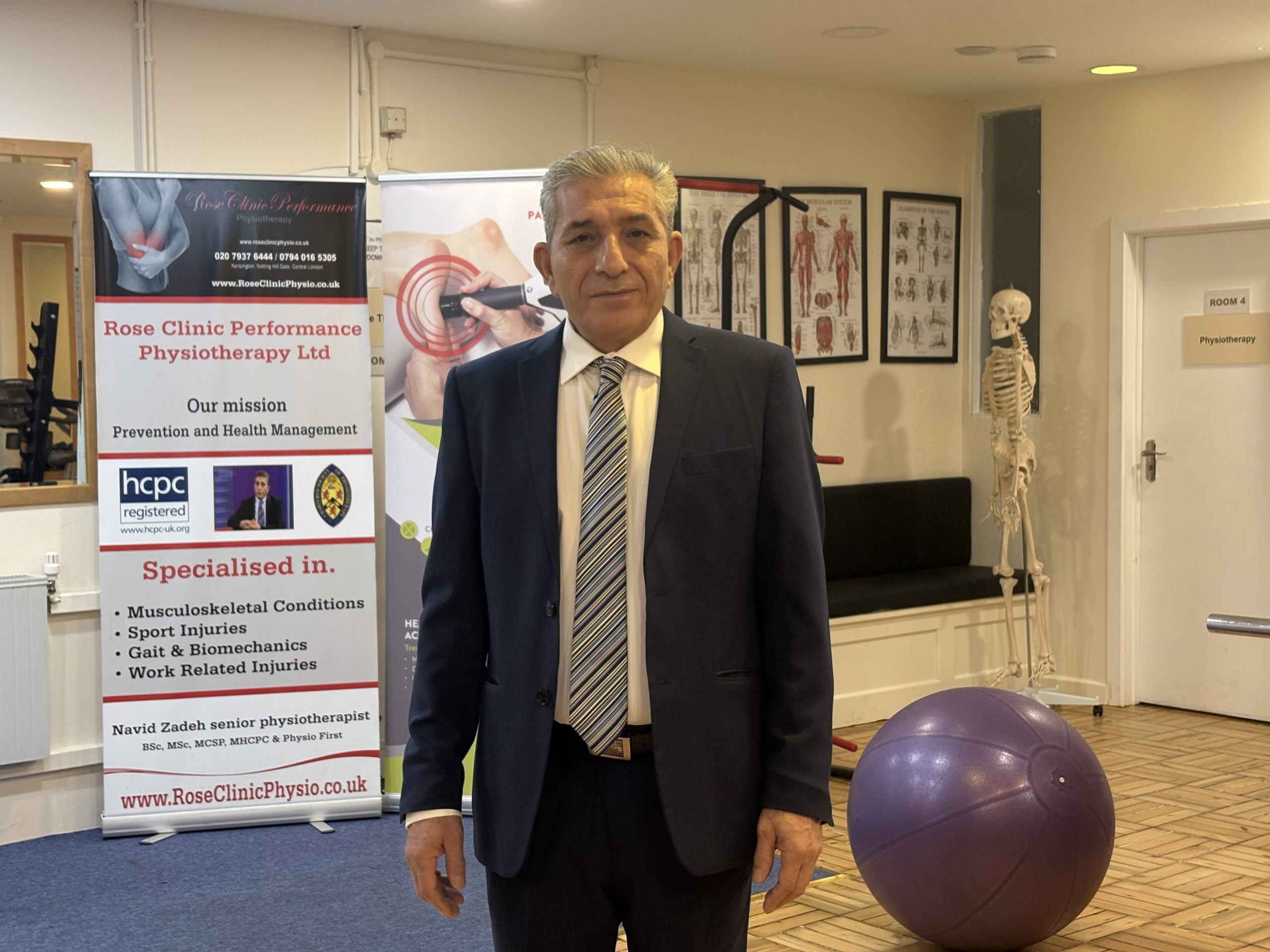
At Rose Clinic Performance Physiotherapy, rehabilitation is tailored to the person, the injury and the level of activity they want to return to. That may include exercise prescription, manual therapy, movement assessment and guidance on training progression, with the focus kept firmly on measurable functional improvement.
Returning to sport without rushing the final stage
The final part of recovery is where many recurrences happen. Feeling better can encourage an immediate return to full-intensity training, but tissues may not yet have regained the strength, endurance and control needed for explosive or repeated movements.
A sensible return is usually staged. You may first restore daily activity, then complete controlled strength work, then introduce sport-specific drills before returning to modified training and finally full participation. Progression should be based on your response over the next 24 hours, not just how you feel during one session.
Useful return-to-sport markers vary by injury, but may include full or near-full range of movement, minimal swelling, comparable strength between sides where appropriate, good balance and control, and the ability to complete relevant drills without a symptom flare-up. For some injuries, particularly after surgery or a significant ligament tear, recovery timelines need to be more cautious and guided by clinical milestones rather than a fixed date.
Reducing the chance of another injury
Prevention is not about eliminating every risk. Sport always involves uncertainty, fatigue and occasional awkward landings. It is about improving the factors you can control.
A sudden increase in training volume, intensity or frequency is a common contributor to overload injuries. Build changes gradually, especially after illness, a holiday, time away from the gym or an injury lay-off. Recovery also matters: poor sleep, inadequate fuelling and repeated hard sessions with little rest can reduce your ability to tolerate training.
Strength training remains one of the most useful tools for many active people. It can improve force tolerance in muscles and tendons, support joint control and address side-to-side differences that may affect performance. The programme should complement your sport rather than leave you too fatigued to train effectively.
Technique, footwear and equipment can also be relevant, but they are rarely the only explanation. A Footscan assessment or movement review may help identify loading patterns for some lower-limb problems, while an ergonomics review can be useful for people whose desk-based work is contributing to neck, shoulder or back symptoms alongside their sport.
Sports injuries can be frustrating, particularly when an event, season or personal goal is approaching. The most productive approach is to replace guesswork with a clear plan: understand the problem, load the body progressively and test your readiness against the movements your sport actually demands. A well-managed recovery does more than get you back on the field, court or road – it gives you a stronger foundation for staying there.