
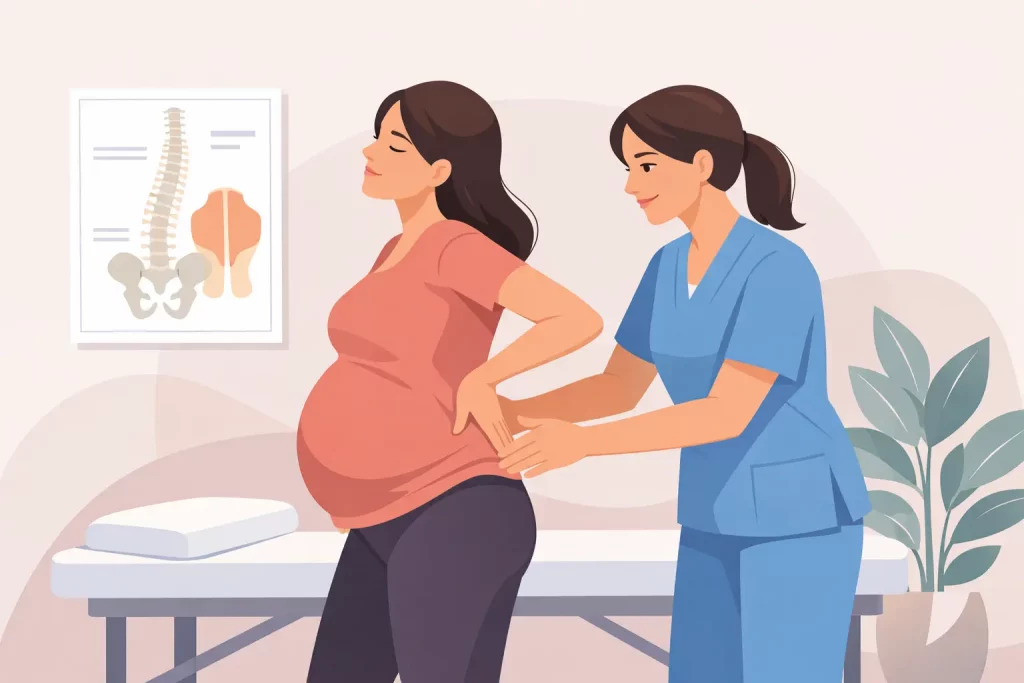
Low back pain can make ordinary parts of pregnancy – getting out of bed, sitting through a meeting, walking to the station or lifting a toddler – feel disproportionately difficult. Physiotherapy in low back pain in pregnancy provides an evidence-based way to understand what is driving symptoms and to manage them without relying on generic advice or simply trying to endure the discomfort.
Pregnancy-related back pain is common, but it should not be dismissed as something you must put up with. A tailored assessment can help you move with more confidence, stay active where appropriate and reduce the strain that builds up across the day.
Why low back pain develops during pregnancy
Your body is adapting quickly. As pregnancy progresses, the growing uterus changes your centre of gravity and the way load travels through your spine, pelvis, hips and legs. Many people begin to lean backwards slightly, which can increase demand on the lower back muscles.
Hormonal changes also affect connective tissues. Relaxin and other hormones support the body’s preparation for birth, but increased joint laxity can leave some people feeling less stable around the pelvis and lower back. This does not mean that the pelvis is “out of place” or needs forceful correction. More often, it means the body needs better support from movement, muscle capacity and sensible day-to-day pacing.
Low back pain may be felt centrally in the lumbar spine, on one side, or alongside pain around the buttock and pelvic joints. Symptoms can also be influenced by previous back injuries, reduced sleep, long periods of sitting, demanding work, reduced activity because of nausea or fatigue, and the physical demands of caring for other children.
How physiotherapy helps low back pain in pregnancy
A chartered physiotherapist starts by listening carefully to your symptoms, stage of pregnancy, medical history, activity levels and daily demands. The aim is not to apply a standard pregnancy programme. It is to identify the positions, movements and loads that aggravate your pain, then build a practical plan around what you need to do.
Assessment may include observing walking, standing, sitting, squatting, turning in bed and other movements that matter to you. Your physiotherapist will assess the lower back, hips, pelvis and surrounding muscles, while respecting comfort, privacy and pregnancy-specific precautions. They should also consider whether symptoms suggest a problem that needs review by your midwife, GP or maternity team.
Treatment commonly combines advice, individually selected exercise and, when suitable, gentle hands-on therapy. The focus is on improving comfortable movement, building support through the trunk and hips, and reducing unnecessary pressure on sensitive tissues. Manual therapy may ease muscle tension or stiffness for some people, but it is not a stand-alone fix. The best results usually come from pairing it with an achievable exercise and movement plan.
Exercise that matches your stage and symptoms
The right exercises depend on your presentation. Early in pregnancy, someone with a history of recurrent back pain may benefit from maintaining general strength and activity. Later in pregnancy, the priority may be finding comfortable ways to walk, climb stairs, turn in bed or manage a workday.
A physiotherapist may use gentle mobility work, hip and gluteal strengthening, trunk-control exercises, breathing strategies and modified functional movements. Exercises should feel manageable, not punishing. A small programme performed consistently is usually more useful than an ambitious routine that leaves you exhausted or sore.
There is no single perfect exercise for every pregnant person with back pain. For example, swimming may be comfortable and useful for one person but aggravate pelvic symptoms in another. Similarly, stretching can feel relieving when muscles are tense, but repeated stretching is not always helpful where joint sensitivity or instability is the main issue. Your response to activity guides the plan.
Practical changes that reduce daily strain
Treatment should make daily life easier, not add another long task list. Small changes can reduce repeated irritation: varying your position during desk work, using support when sitting, taking short movement breaks, and avoiding prolonged standing in one posture when possible.
For sleep, a pillow between the knees or under the bump may improve comfort when side lying. When turning in bed, keeping the knees together and rolling as one unit can reduce tugging around the pelvis. For lifting, especially when caring for a young child, getting close to the load, bending through the hips and knees, and avoiding twisting under load are often helpful adjustments.
If your job involves long hours at a desk, driving, manual handling or standing, an ergonomic review may be valuable. The goal is not a perfectly still posture. It is a working set-up that allows you to change position often and continue doing your job with less discomfort.
When back pain needs medical assessment
Most pregnancy-related low back pain is Musculoskeletal and responds well to appropriate management. However, back pain during pregnancy should be assessed urgently if it is severe, sudden, getting rapidly worse, follows a fall or accident, or is accompanied by fever, vaginal bleeding, fluid loss, regular contractions, abdominal pain or feeling unwell.
Seek prompt medical advice if you experience new numbness in the saddle area, marked weakness in a leg, loss of bladder or bowel control, pain or burning when passing urine, or pain that is unlike your usual symptoms. Pain travelling into the leg can occur with nerve irritation, but it still deserves individual assessment, particularly if there is weakness, altered sensation or worsening symptoms.
A physiotherapist works alongside, not instead of, your maternity care team. Clear communication is especially important if you have high-risk pregnancy factors, high blood pressure, placenta-related concerns, significant swelling, or have been advised to modify activity by your midwife or obstetrician.
What to expect from your first appointment
Your first session should give you clarity. You should leave knowing what is most likely contributing to your symptoms, which activities are sensible to continue, what to modify for now, and what signs would warrant further medical advice.
At Rose Clinic Performance Physiotherapy, pregnancy-related back pain is approached as a functional problem with individual solutions. Your plan should account for work, commuting, fitness, sleep, previous injuries and the physical changes of pregnancy, rather than relying on a one-size-fits-all treatment protocol.
Progress is not always linear. A poor night’s sleep, a busy week at work, a long journey or a growth spurt can temporarily increase symptoms. The measure of improvement is often greater tolerance: being able to walk farther, sit longer, turn in bed more easily, or finish the day with less pain. Your programme can then be adjusted as pregnancy progresses.
Can physiotherapy prepare you for after birth?
Yes, provided the focus remains realistic. Maintaining comfortable strength, confidence in movement and good lifting habits can make the early postnatal period easier to manage. New parents regularly spend time feeding in awkward positions, carrying a baby, lifting a pram and operating on limited sleep. Learning how to distribute load and recognise early flare-up signs is valuable preparation.
This is not about “fixing” every ache before birth or training through pain. It is about giving your body appropriate support now and creating a plan you can return to after delivery, when your recovery, birth experience and medical guidance will shape the next stage.
If low back pain is restricting your work, sleep or ability to enjoy pregnancy, early physiotherapy can offer a structured route forward. The most useful plan is one that fits your real life, respects maternity guidance and helps you keep moving with greater comfort and confidence.