
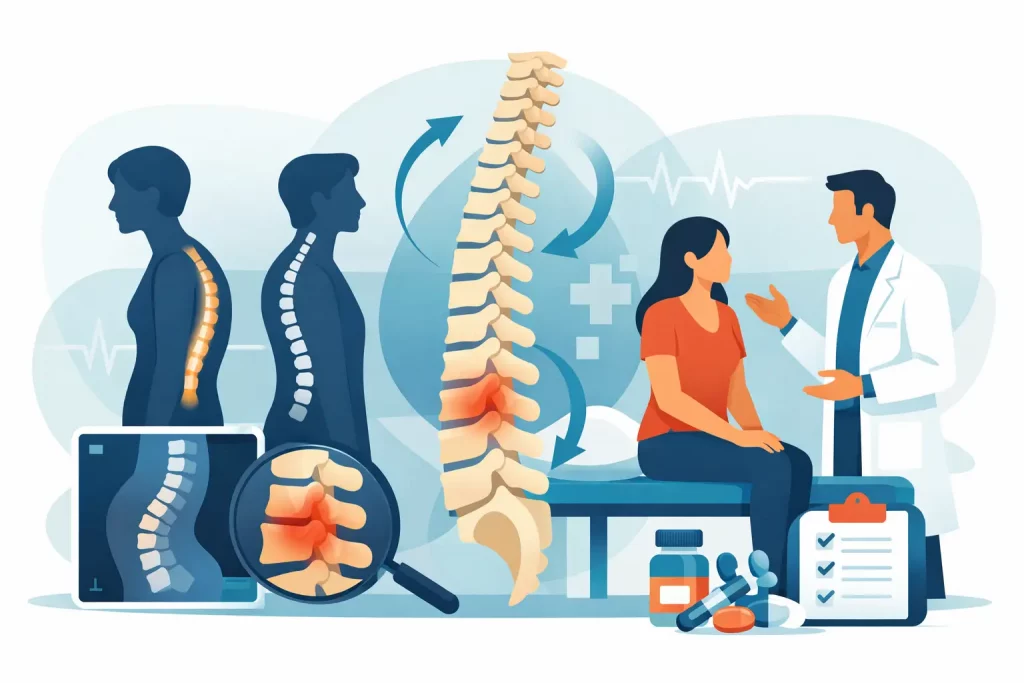
A shoulder that appears higher than the other, a rounded upper back, a head that sits forward, or a persistent lean to one side can all be described as posture abnormalities. For many people, the concern starts with discomfort at a desk, recurring neck or back pain, or the sense that movement has become restricted. The key question is not whether your posture looks perfect. It is whether your body can move, load and recover comfortably during work, exercise and everyday life.
Posture is not a single fixed position that everyone should achieve. It changes constantly as you walk, sit, reach, train and rest. A posture that is comfortable for one person may be limited or painful for another, particularly after injury, surgery, long periods of inactivity or repetitive work. A chartered physiotherapist can assess the whole picture and identify the factors most relevant to your symptoms and goals.
What are posture abnormalities?
Posture abnormalities are noticeable changes in body alignment or habitual positioning that may affect how forces are distributed through muscles, joints and the spine. They can be temporary, such as a protective lean after a painful episode, or longer-standing, where movement restrictions, weakness, skeletal shape or habitual activity patterns have developed over time.
Common examples include a forward head position, rounded shoulders, increased curvature of the upper back, an exaggerated lower-back curve, a flattened lower back, a sideways spinal curve and pelvic asymmetry. Some people have a combination of these features.
Appearance alone does not diagnose a problem. Plenty of people with visibly rounded shoulders have no pain and function very well. Equally, someone whose posture appears neutral may have significant symptoms. Physiotherapy assessment therefore focuses on movement quality, strength, joint mobility, nerve symptoms, daily demands and the response to loading, rather than relying on a photograph or a single ideal posture.
Why posture changes can become painful
A sustained position can make a sensitive area sore, but posture is rarely the only cause of pain. Symptoms usually arise from a combination of physical capacity, workload, recovery, stress, sleep, previous injury and the amount of time spent in one position.
For example, an office worker may develop neck and shoulder discomfort when long video calls, limited breaks and an incorrectly positioned screen repeatedly load the same muscles. A runner may lean or rotate differently after an ankle injury, placing extra demand on the hip or lower back. Following surgery, stiffness and reduced confidence in movement can lead to compensations that persist after the tissues have healed.
Some postural changes are structural, meaning they relate to the shape or alignment of the spine and cannot simply be corrected by being told to “sit up straight”. Others are more flexible and respond well to improving strength, mobility and movement habits. The distinction matters because treatment should be realistic, specific and based on what is causing difficulty for you.
Common contributing factors
Prolonged sitting, repetitive work and reduced activity can contribute, particularly when they are paired with poor workstation set-up or few opportunities to change position. Muscle weakness or reduced endurance around the trunk, shoulder blades, hips and legs may also make certain positions harder to tolerate.
Pain is another major factor. The body naturally adapts away from a painful movement or joint, sometimes creating a temporary asymmetry. Previous injuries, arthritis, hypermobility, neurological conditions, visual problems and differences in leg length can also influence alignment and movement. In children and adolescents, rapid growth can make postural changes more noticeable and should be assessed appropriately.
Signs that deserve a physiotherapy assessment
A physiotherapy appointment is worthwhile if posture changes are accompanied by persistent pain, reduced movement, weakness, recurrent headaches, balance problems or difficulty completing normal work, training or daily activities. It is particularly useful when symptoms return despite rest, massage or repeated attempts to improve your desk set-up.
You should seek prompt medical advice for severe or worsening pain after significant trauma, unexplained weight loss, fever, a history of cancer, new problems with bladder or bowel control, numbness around the saddle area, or progressive weakness or numbness in the arms or legs. These symptoms need medical assessment rather than a posture correction programme.
For less urgent concerns, early assessment can prevent a manageable issue from becoming a longer-term limitation. At Rose Clinic Performance Physiotherapy, assessment is designed to establish what is driving your symptoms and what will make a measurable difference, rather than applying a generic set of posture exercises.
How physiotherapy assesses posture abnormalities
An effective assessment begins with a detailed discussion. Your physiotherapist will ask when symptoms began, which activities aggravate or ease them, your work and sport demands, previous injuries, general health and recovery. This gives essential context that a posture screen alone cannot provide.
Physical assessment may include observing how you sit, stand, walk, squat, reach or perform a sport-specific movement. Your physiotherapist may assess spinal and joint mobility, muscle strength and endurance, balance, flexibility, coordination and, where relevant, neurological signs. Desk workers may benefit from an ergonomic review, while runners or active patients may require assessment of gait, lower-limb control and training load.
This process helps separate a visual difference from a clinically meaningful problem. A slight pelvic tilt, for instance, may be normal variation. If it is linked to hip pain, reduced leg strength and difficulty running, it becomes useful information for a targeted rehabilitation plan.
Treatment that improves movement, not just appearance
The most effective treatment for posture-related symptoms aims to improve comfort, movement confidence and capacity for the activities that matter to you. It may include hands-on therapy to address painful or stiff tissues, but this is usually paired with progressive exercise and practical changes to daily loading.
Exercises are selected according to the assessment findings. Someone with neck pain and rounded upper-back posture may need thoracic mobility work, shoulder-blade and deep neck muscle endurance, and a gradual return to overhead activity. Someone with lower-back discomfort may benefit more from hip strength, trunk control and better tolerance of lifting or prolonged sitting. The programme should progress as symptoms and function improve.
Ergonomics can make a meaningful difference for people who work at a screen. The goal is not to hold one rigid “correct” position all day. A chair, screen, keyboard and mouse should support comfortable work, while regular changes of position reduce prolonged loading. Standing for a few minutes, walking during a call, or varying tasks can be more useful than forcing yourself into an uncomfortable posture.
For active people, rehabilitation should also consider training volume, technique and recovery. Strength work may address the capacity gap that allowed symptoms to develop, while a gradual return-to-sport plan prevents a rapid increase in load from provoking a flare-up.
Can exercises correct posture?
Exercises can improve the strength, mobility and endurance needed to move and hold positions more comfortably. They can reduce pain and improve function when they are matched to the individual. However, they do not always change a structural spinal curve, and chasing a perfectly straight appearance is not a reliable measure of success.
Better outcomes are measured by practical change: working through the day with less pain, returning to the gym, running without recurring symptoms, lifting with confidence or sleeping more comfortably. This results-focused approach is more useful than repeatedly checking your reflection.
Simple ways to support your recovery
Small, consistent changes are usually more effective than an intense short-lived routine. If you spend much of the day seated, change position regularly rather than waiting until you are stiff. Build activity gradually if you have become less active, and avoid increasing gym sessions, running distance or manual work too sharply after a period of reduced load.
Use your symptoms as information, not as a reason to stop all movement. Mild, short-lived discomfort during rehabilitation can be acceptable, depending on the condition and exercise. Pain that escalates sharply, lingers for longer or is accompanied by new neurological symptoms should be reviewed by your clinician.
Posture abnormalities are best understood as part of a wider movement and health picture. With an evidence-based assessment and a plan tailored to your work, sport and recovery needs, the aim is not to hold yourself rigidly. It is to help your body move well enough to meet the demands you place on it, with less pain and greater confidence.